Malted Sugar Cookies
Have you ever wondered just what it is that makes restaurant/diner pancakes taste SO GOOD?
I used to wonder it too. It’s hard to even explain it. There’s just something about the flavor of them that just gives them a little something ‘extra’ than what you can get out of a box or even the regular pancakes you make at home.
Nothing against any of that; I just really wondered what it was about the restaurant/diner pancakes that made them taste so special.
Well, a few years back I was reading a random food and dining/lifestyle magazine and they were doing a spot on some diner (I can’t remember the name just now), and they dropped what felt, at the time, like a HUGE bomb of truth on me.
Most diners/restaurants use malted milk powder in their pancake batter.
Now, maybe you’re like I was at that time and have absolutely no idea what malted milk powder even is. It’s okay; we’re all learning together.
Malted milk powder is a powder made frm malted barley, wheat flour, and evaporated milk. It was hugely popular in the era of soda fountain and milk shake shops, as has a very pronounced and distinctive flavor that lends itself wonderfully to milkshakes, floats and whatnot.
As it turns out, it’s also great in baked goods, like pancakes…and other things.
If you’ve been around here and following this blog for a while then you know that I have a very special love for sugar cookies. They’re my favorite classic dessert. This isn’t because I think they’re ‘easy’ or simple to pull off.
I’ve made a LOT of sugar cookies, and it’s made me somewhat picky and critical when it comes to sugar cookie recipes.
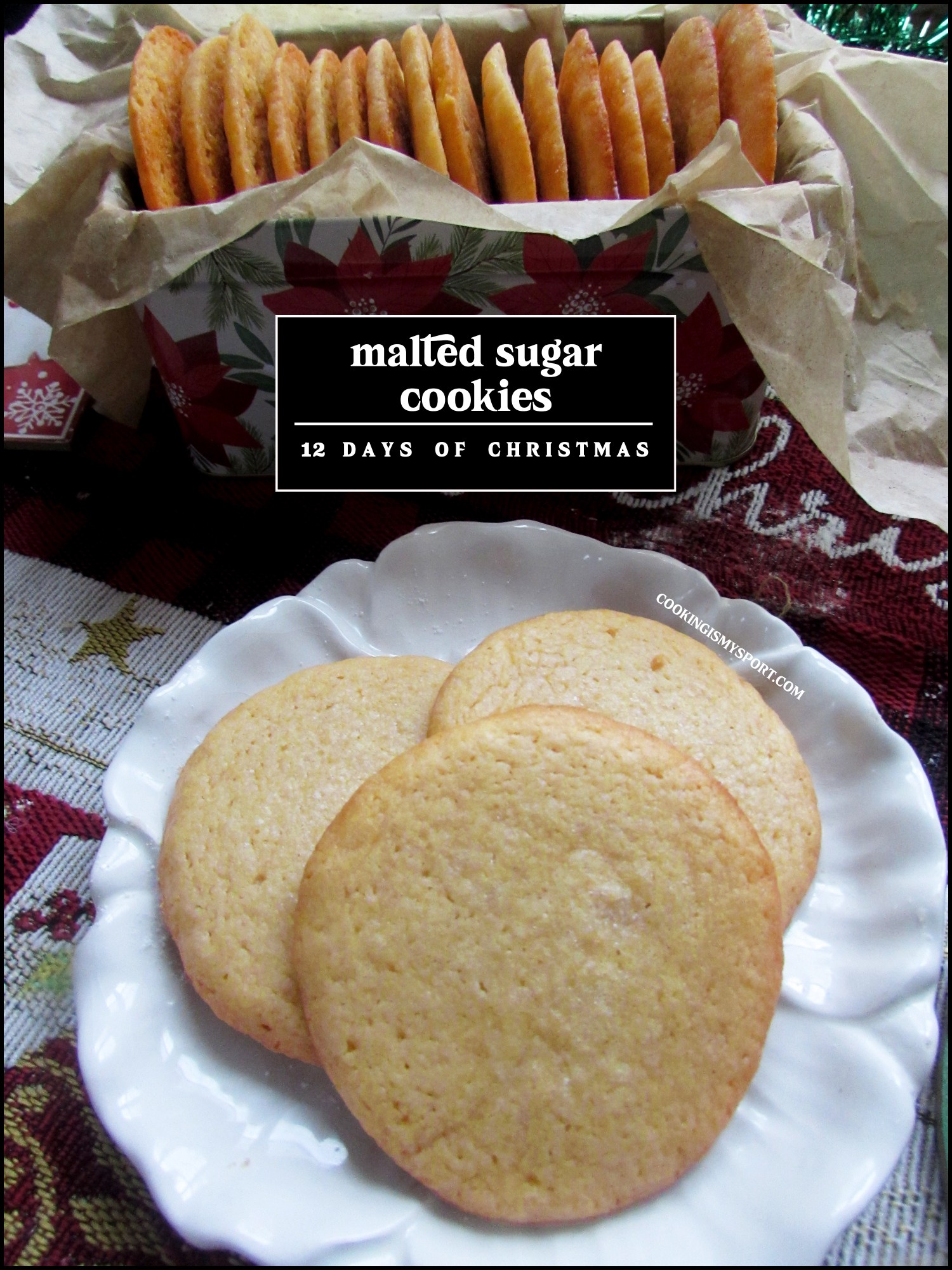
Whether you’re after a thick, soft and bakery style sugar, or a thinner, crisper or chewier sugar cookie, they have to be the right texture, and achieving that texture isn’t always easy.
Regardless of its texture, a good sugar cookie recipe will also always retain its shape while baking.
And then there’s flavor: even more important than the texture or even the shape that they take, is the flavor of the sugar cookie itself. Now, most of the time the cookie dough’s flavor is enhanced with teh addition of vanilla extract, almond extract, or even sometimes a citrus-y extract like lemon or orange.
There are also other options; malted milk powder for example.
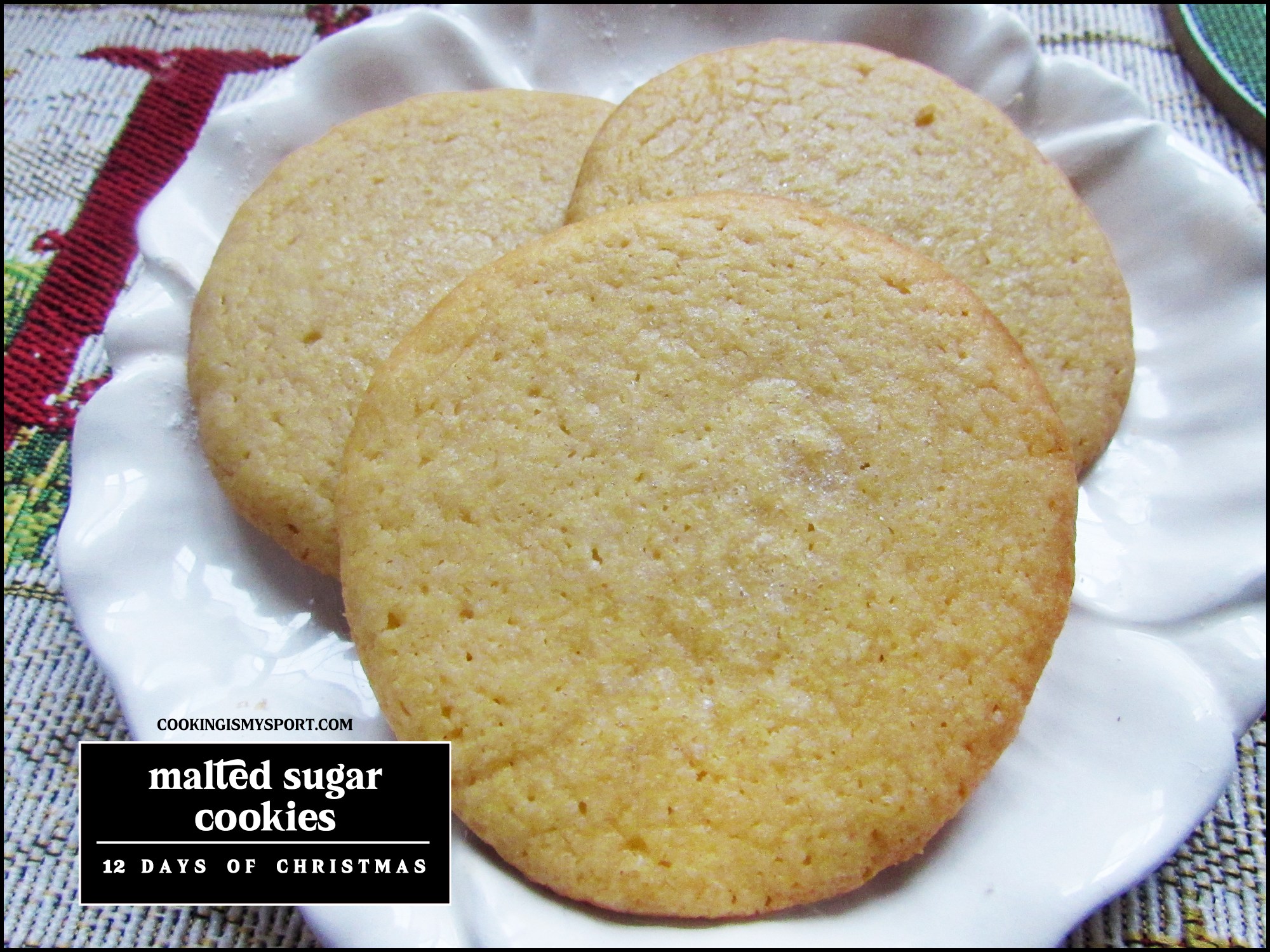
The flavor of malted milk power is hard to explain. It’s a warm, caramel-y, rich, nutty and almost toasted marshmallow flavor to it that isn’t overly sweet, but still definitely makes you feel like you’re enjoying a ‘treat’. This makes it perfect for recipes like pancakes, biscuits, or scones where you don’t need them to be overly sweet but still want to give it a distinct boost in flavor.
It’s also practically tailor made for other Blank Canvas recipes like sugar cookies that don’t need much help to be tasty, but can’t still be given a slightly twist of distinctiveness.

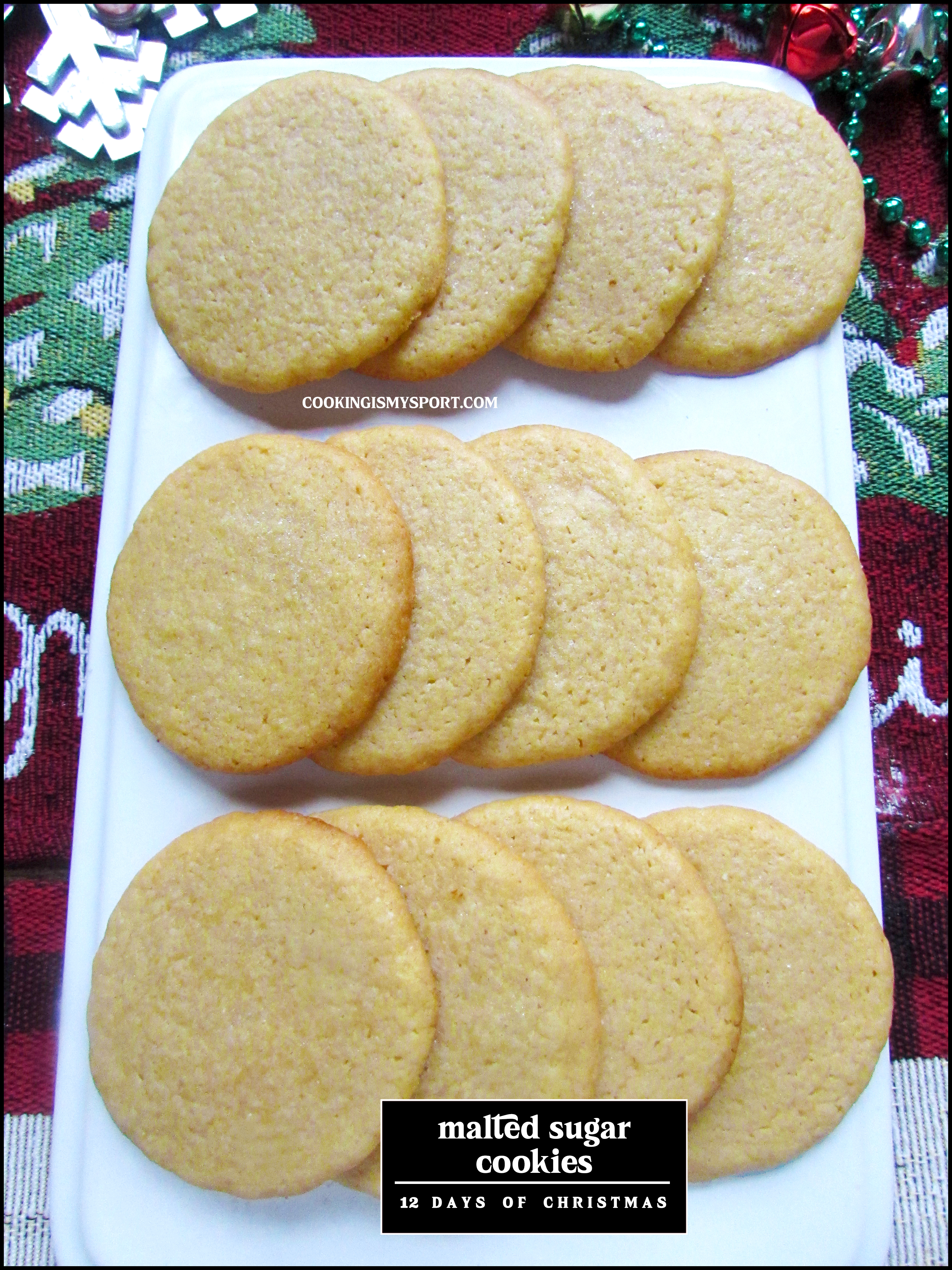
There’s a healthy amount of malted milk powder in this cookie dough; just as much as the sugar itself. You’ll find out why when you try them for yourself. I was anticipating a change in what I’m used to in term of the flavor (which I’ll get to in a second), but the biggest surprise that I got was at the actual texture that the milk powder gave to the cookies.
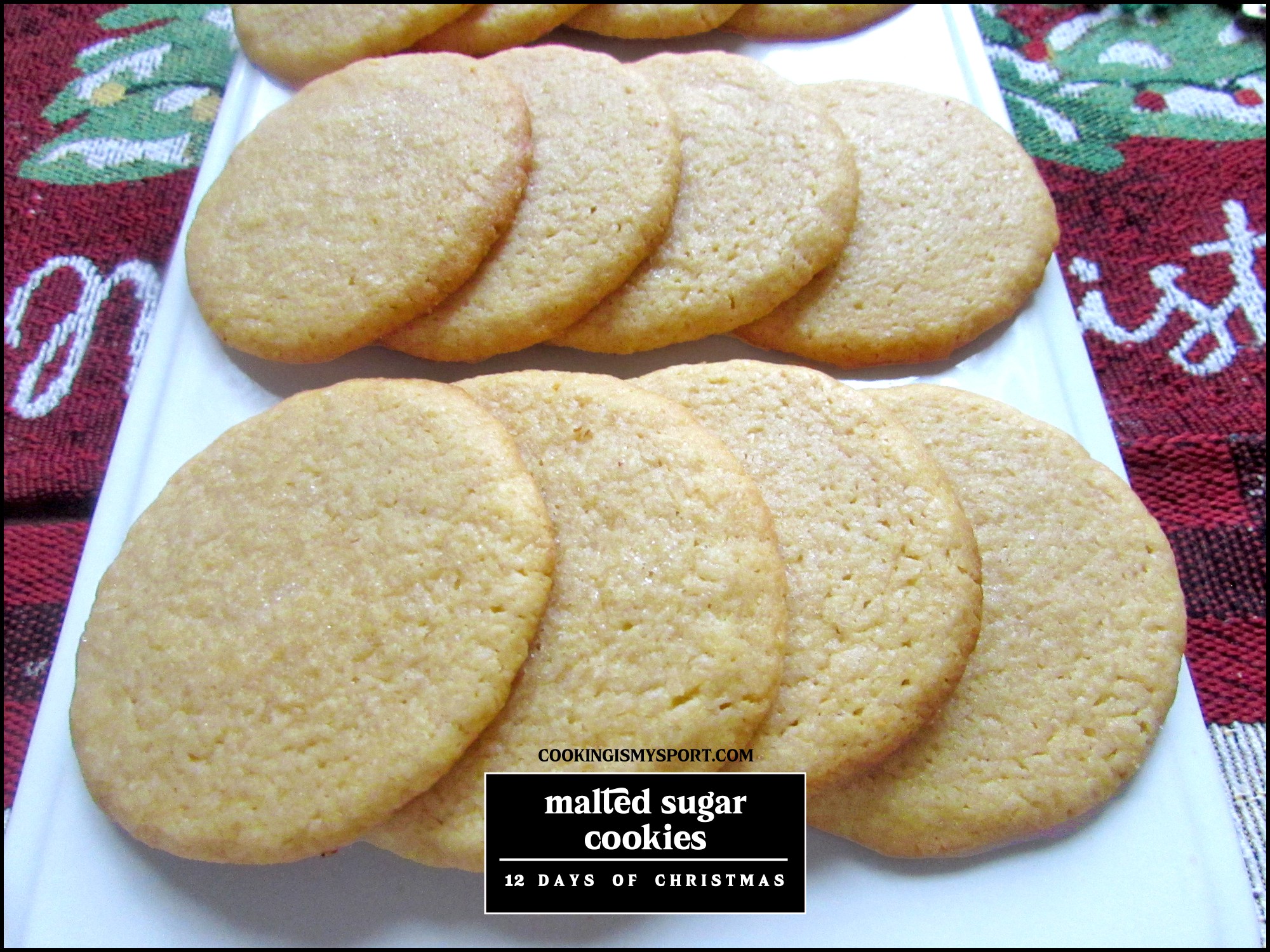
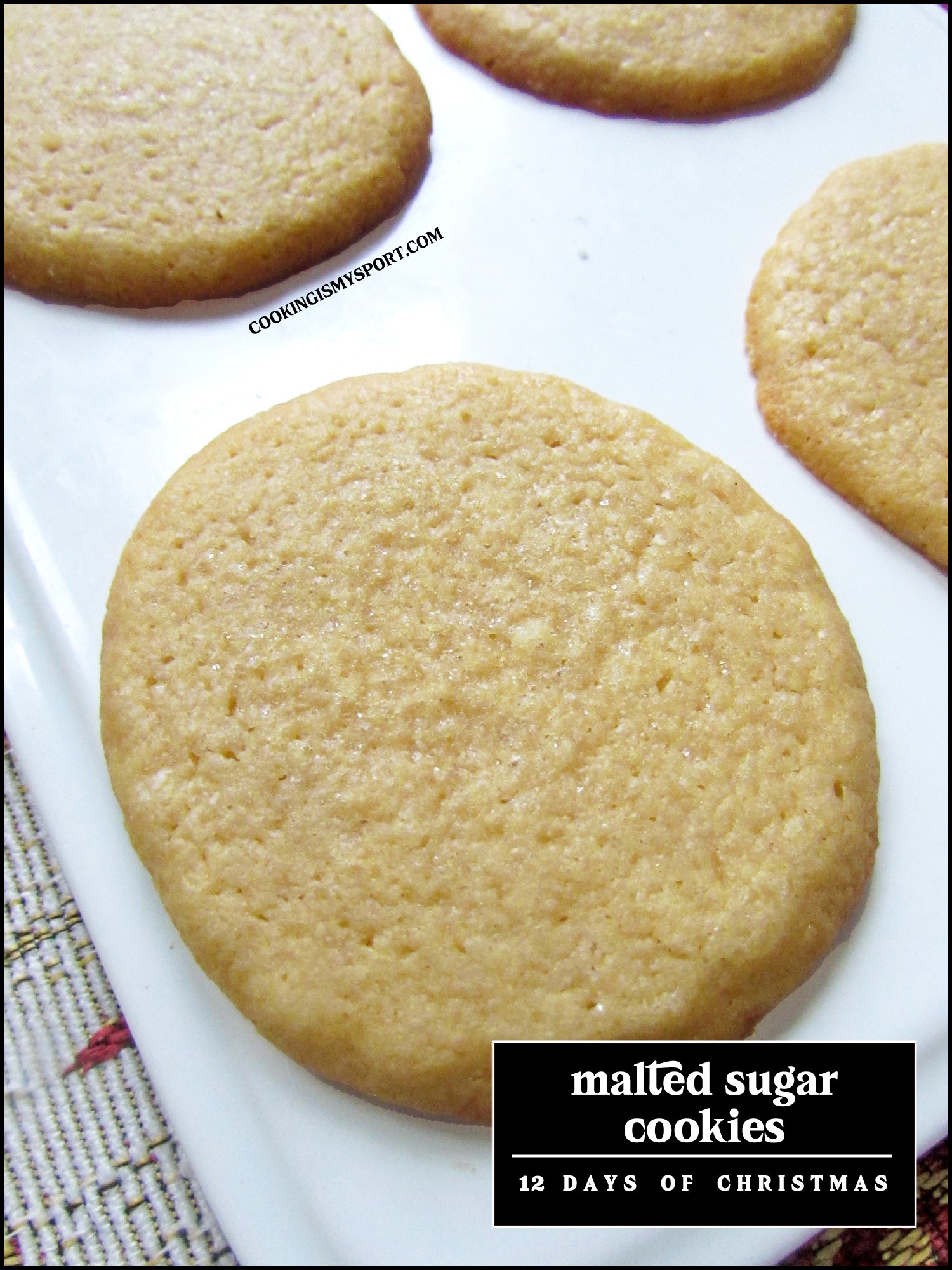
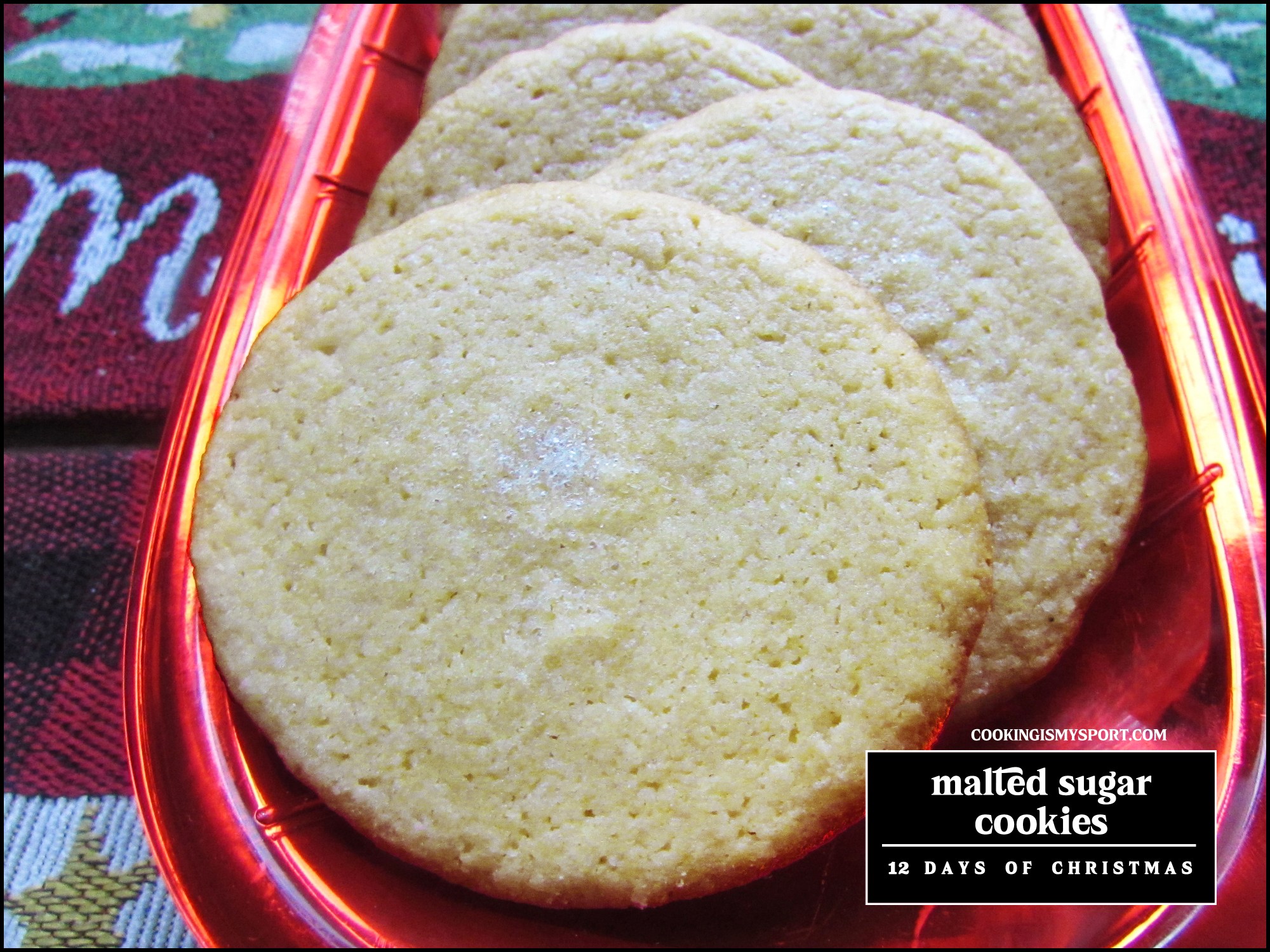
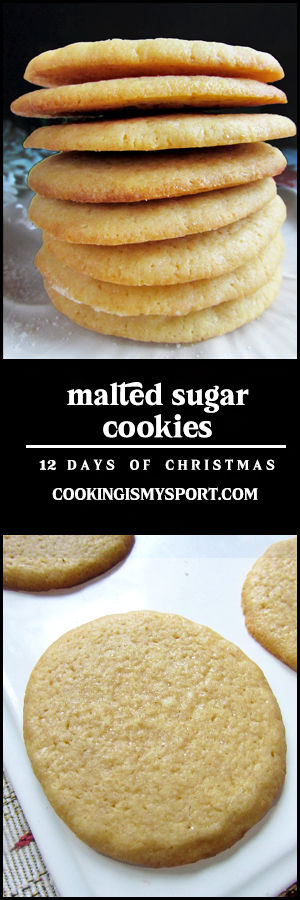
Guys, they are SO SOFT AND MOIST. I’m talking, fall apart in your mouth tender while also at the same time having a slight chew to them that just really works. The flavor of the cookie is that exact flavor that you get from the restaurant/diner pancakes. Again, it just really works. It works so well that I didn’t feel the need to add any frosting or icing to these at all. They’re perfect enough all on their own.
8 days into the 12 Days of Christmas—4 days left to go!!

Day 1: Holiday Lunch Lady Bars
Day 2: Ginger Thins
Day 3: Chunky Gingerbread Spiced Apple Butter
Day 4: Bakery-Style Apple Butter Cookies
Day 5: Apple Butter Spice Cakes
Day 6: Spiced Polvorónes Cookies
Day 7: Pumpkin Angel Biscuits
Day 8: Malted Sugar Cookies
Malted Sugar Cookies
Recipe Adapted from Food Network
Ingredients
- 2 1/4 cups all purpose flour
- 3/4 cup malted milk powder (not chocolate; I used King Arthur Flour, but you can use Carnation or any other brand)
- 1/2 teaspoon baking powder
- 2 sticks (1 cup) unsalted butter, at room temperature
- 3/4 cup white granulated sugar
- 1 large egg
- 1 tablespoon vanilla extract
Directions
Whisk the flour, malted milk powder and baking powder in a medium bowl and set aside.
In the bowl of a standing mixer or a large bowl, cream together the butter and the sugar until light and creamy.
Add the egg and the vanilla and mix just until combined.
Add the flour mixture in two batches, mixing just until combined.
Shape dough into a disk and wrap in plastic wrap. Refrigerate overnight.
Preheat oven to 350 degrees Fahrenheit.
Line 2 baking sheets with parchment paper. Working with 1 disk at a time, roll out the dough on a floured surface until 1/4 inch thick. Cut out cookies with 2- to 3-inch cookie cutters; arrange about 1 inch apart on the prepared baking sheets. Reroll the scraps once and cut out more cookies.
Freeze until firm, 15-20 minutes.
Bake, switching the pans halfway through, until the cookies are golden around the edges, 12 to 15 minutes. Let cool 5 minutes on the baking sheets, then transfer to racks to cool completely.
Note: no one oven is the same, & different baking sheets bake cookies differently. Keeping this in mind, I will ALWAYS test bake one cookie before baking entire sheets of the whole batch, just to get a good idea of how long they should be in the oven and if I need to adjust the way I’ve cut, rolled them out, etc. I highly recommend that you do the same.



Where do you get malted milk powder?
I ordered mine from King Arthur flour online, but you can also get it in grocery stores typically on the aisle where you find the hot chocolate/cocoa mixes.
It used to be easy to find, but I’ve not seen it in the shops in a long time.
Very true! I ordered mine online, but depending on where you live and the stores around you, you may be able to find one on site!
Then again, I haven’t looked recently!